
Editor’s preface
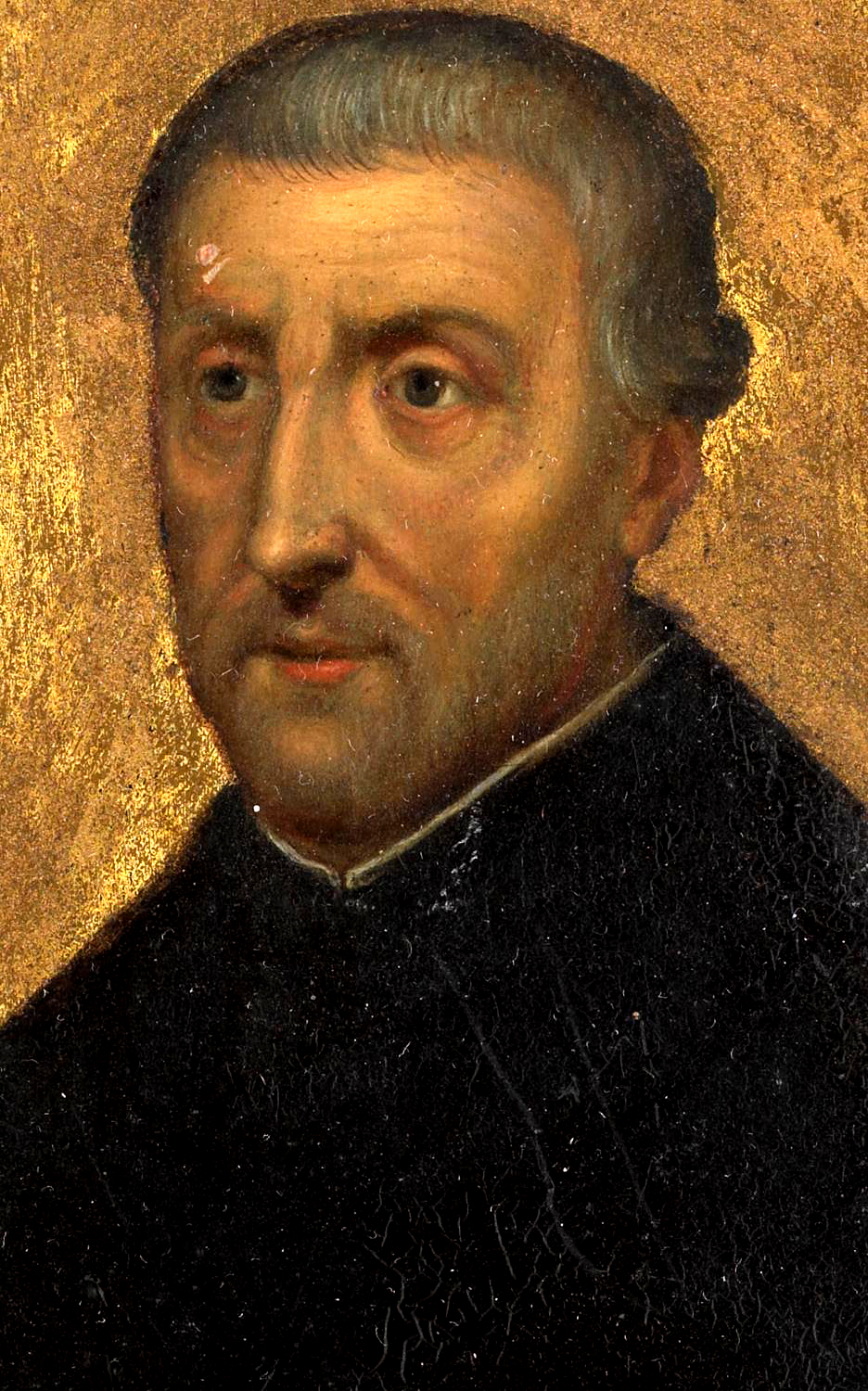
Saint Peter Canisius
Peter Canisius, of the Society of Jesus, shines in the foremost ranks among that host of great men whom the Church, in the 16th century, drew from her ever-fertile bosom to oppose heresy. Germany, where he was born, called Canisius the “hammer of heretics.” Endowed with extraordinary knowledge and great eloquence, he crushed them with his writings and speeches, from the pulpits of universities and churches to the diets and councils. It was he whom the Holy See tasked with refuting the historical slanders amassed by the Protestant Centuriators of Magdeburg. And when Charles Quint’s brother, Ferdinand, then King of the Romans, requested from Saint Ignatius, the General of the Society of Jesus, a short yet solid summary of Christian doctrine that could preserve both the knowledge and the faith itself in his states, while also undermining the contagious influence of heretical pamphlets, it was again to Canisius that this important task was entrusted.
This summary of Christian doctrine (Summa doctrinae Christianae), commonly known as the Great Catechism of Canisius, can be regarded as one of his primary claims to fame. It has outlived all the revolutions that have swept away so many books over the past three centuries. It remains, alongside the Roman Catechism (Catechismus Concilii Tridentini ad parochos), a monument to the Church’s generous efforts in the 16th century to preserve the faith of her children, and a testimony to the principle once proclaimed by the holy Fathers: that error ultimately serves the truth, and that through its false objections and misinterpretations, it helps to make the exposition of the truth more explicit, more firm, and more brilliant.
The Catechism of Canisius was published twelve years before the Roman Catechism, in 1554, after having been carefully reviewed and formally approved by the foremost theologians in Rome. The author had taken care to cite in the margins all the passages from Sacred Scripture, the Fathers, and the Councils that support Catholic dogma, offering Protestants […] the means to find enlightenment and convert, and giving Catholics, so often attacked, the means to defend themselves. The catechist finds gathered within it all the proofs required for solid instruction.
In 1556, Canisius himself produced a shorter version from it, the Small Catechism of Catholics (Parvus Catechismus Catholicorum), where he focused more on presenting the affirmations than the proofs of the faith.
It is this Small Catechism that we present today in a new French translation. We have endeavored to preserve the theological integrity of the text, seeking in our language words that are either consecrated by use, appropriately corresponding, or equivalent, so as to faithfully and precisely convey the meaning of the Latin, even at the cost of occasionally sacrificing elegance for the sake of dogmatic accuracy as expressed by the author.
This little book has many other claims to recommendation. By 1686, it already had over four hundred editions, and since then it has been reprinted a very great number of times.
It was translated into all the languages of Europe, and for a long time, Russia, Poland, Sweden, Denmark, England, Ireland, the Netherlands, and Switzerland knew scarcely any other elementary exposition of Christian doctrine.
As early as 1560, Ferdinand I spread it throughout his empire, and its influence was soon so beneficial that this prince, to express his gratitude toward Peter Canisius and Paul Hoffée, those two apostles of the Society of Jesus in Germany, was fond of applying to them these words that the Church repeats in its prayers in honor of Saints Peter and Paul: Petrus et Paulus ipsi nos docuerunt legem tuam, Domine (“Peter and Paul themselves have taught us your law, O Lord”).
Philip II of Spain followed his uncle Ferdinand’s example. The doctors of the University of Louvain, whom he consulted, pointed out Canisius’s Catechism as the work most suited to promote solid piety and true doctrine. Philip II had it adopted throughout all his realms, both in the old and new worlds.
In 1750, in Rome itself, under the eyes of the Sovereign Pontiff, it was still this Catechism that was chosen to instruct new converts.
We could produce a long list if we wished to recall all the doctors and bishops who gave it their approval. But one name alone is enough: Saint Charles Borromeo ordered it to be used in his minor seminary. It should also be added that in 1686, Monsignor de Harlay authorized the publication of a French translation in Paris under his high patronage.
If anyone now wonders at this extraordinary success this work has achieved, success that few books have ever matched, they would quickly understand why upon opening this little book: so brief, and yet so complete; so theological, yet nonetheless so simple and easy to understand; so well-adapted to the errors, and therefore the needs, of the 16th century, and indeed, of our own time which descends from it; so well-organized, so devout, and so effective in communicating both piety and doctrine.
One recognizes on every page the apostle who found joy in teaching catechism personally to children and the poor; the controversialist who had so often grappled with heresy; the accomplished theologian who had explored every question in depth, and now summarizes them in a few words. One also sees the saint, who knew how to infuse even the dry language of doctrine with the anointing of his heart.
Many souls were once brought back to God through this simple Catechism, may it still bear the same fruits of salvation! May it, by presenting the truths of the faith to our children, imprint them more deeply and forever in their minds and hearts!